

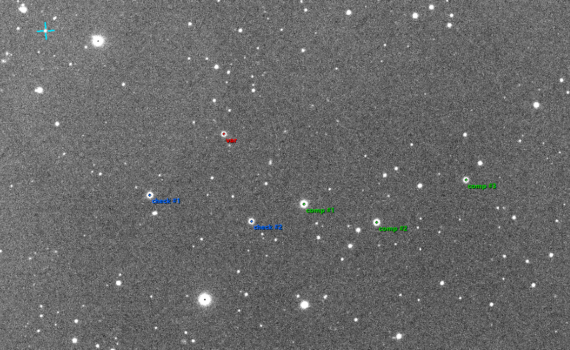
Julius Debus & Lukas Hauf As part of the advanced lab course of the department of physics of TU Darmstadt, on April 15, 2023 we observed the pulsating star V0417 Boo, which is part of the constellation Boötes. This particular star is of high interest and was chosen for the […]
Robert Roth
49 posts
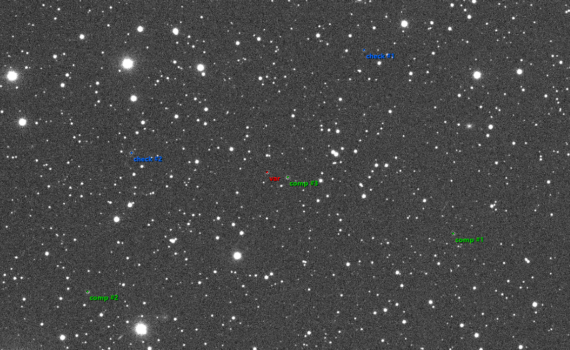
Frederik Krenzer & Jonathan Laux In our observation and investigation of the variable star V 0750 Aur in the constellation Auriga (see figure 1) on december 1st 2022, we could detect not one, but at least two different pulsation periods which we calculated to be 0.0678 d (97.6 minutes) and […]
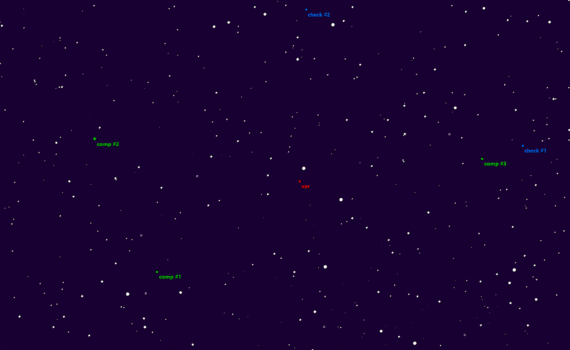
Pierre Knötzele & Dominic Rodemer During the advanced lab course of the Department of Physics at TU Darmstadt, a variable star was to be observed for the experiment “Photometry in Astrophysics”. The star ASASSN-V J235154.14+381726.8 in the constellation Andromeda was chosen. The TURMX telescope was programmed for automatic recording in […]

The Sunflower Galaxy, M 63, is a so-called flocculent spiral galaxy in the constellation Canes Venatici (hunting dogs). It is about 29 million lightyears away and belongs to the M 51 galaxy group, named after the brightest galaxy in the pack. Although it is a spiral galaxy, there is are […]

The Whirlpool Galaxy, M 51, is one of the prettiest galaxies in the northern sky in the unremarkable constellation Canes Venatici (hunting dogs). It is about 31 million lightyears away and has a diameter of about 76 000 lightyears. Actually, it is not one galaxy but two galaxies whose gravitational […]
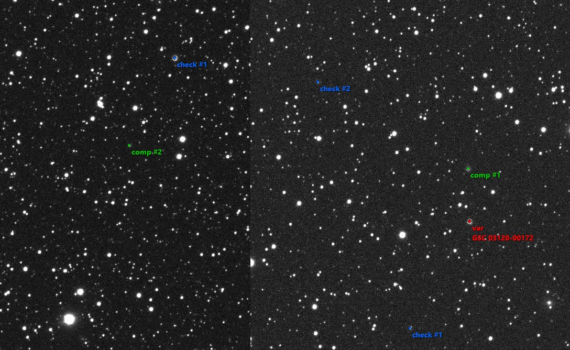
Mark Bergmann & Konrad Weber Using the TURMX observatory in summer of 2022, we were able to observe pulsating stars in the constellation of Lyrae. This region of the night sky was chosen as it stood in zenith around midnight for the observatory in spanish Extremadura during the date of […]
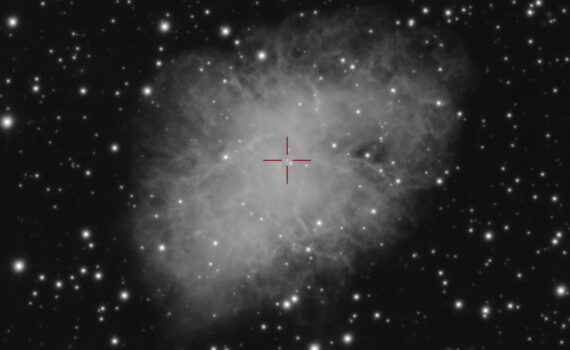
The most famous supernova remnant and number 1 in the Messier catalog – this is the Crab Nebula, M1. Its origin is the supernova, now cataloged as SN1054, which was observed in Juli 1054 by Chinese and other astronomers. The supernova was brighter than Venus and visible on the day-time […]
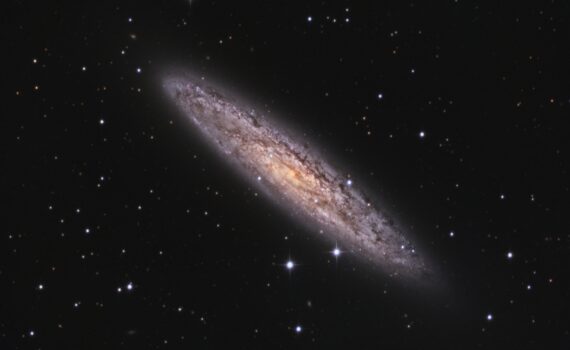
One of the most impressive and pretty galaxies, the Sculptor Galaxy, NGC253, in the constellation Sculptor. It is about 11 million lightyears away and has a diameter of about 90 000 lightyears. It is a spiral galaxy, although the spiral arm are not obvious because of the prominent dark nebulae […]

This is the Helix Nebula, NGC7293, a large planetary nebula located in the constellation Aquarius. It is just 650 light-years away and thus one of the closest planetary nebulae. It has been expanding for about 50000 years and has reached a diameter of about 2.9 light-years. The small dot in […]
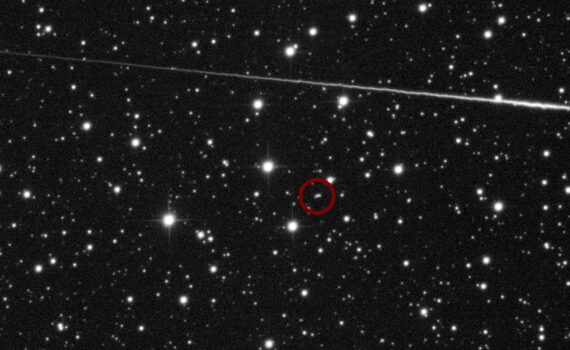
The James Webb Space Telescope (JWST or Webb for short) is on its way to its final orbit around the L2 Lagrange point, 1.5 million kilometers away from us. Check out the JWST Web Site for lots of information. While on its way, we tried to capture the JWST with […]
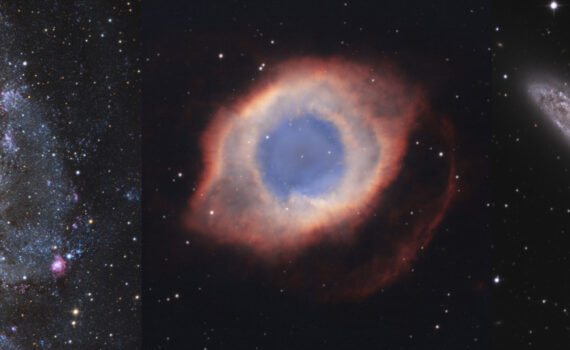
Vielen Dank für die rege Beiteiligung an unserem digitalen Spaziergang! Wir hatten über die gesamte Zeit mehr als 400 TeilnehmerInnen allein auf Twitch 🙂 Zu einem ganz besonderen „Weihnachtsspaziergang durch das Universum“ lädt die TU Darmstadt und das Hessische Clusterprojekt ELEMENTS am Mittwoch, 29. Dezember 2021 ein: Von 19:30 Uhr bis etwa […]
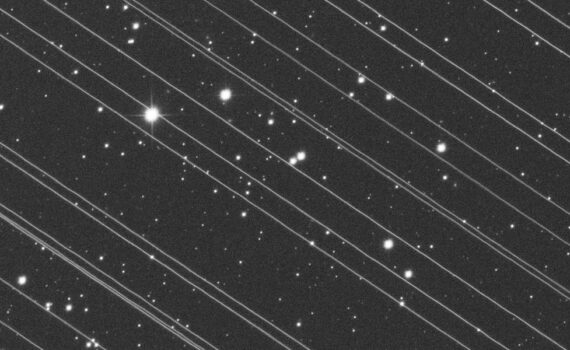
Usually satellites like to photo-bomb our astronomical images. Often it is one of the Starlink satellites that populate low earth orbit – approximately 2000 Starlink satellites have been launched by now and about 1700 are active. These numbers are changing quickly… with every new launch of a Starlink batch. We […]
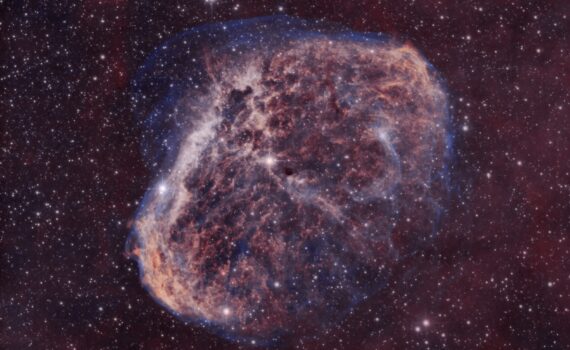
This is one of the first light images with our new setup at the TURMX Observatory, hosted at the e-EyE Astronomical Complex in Extremadura, Spain. It is only a quick snapshot with a total of 6 hours of exposure time with the Baader CMOS-optimized ultra-narrowband filters as a first test […]
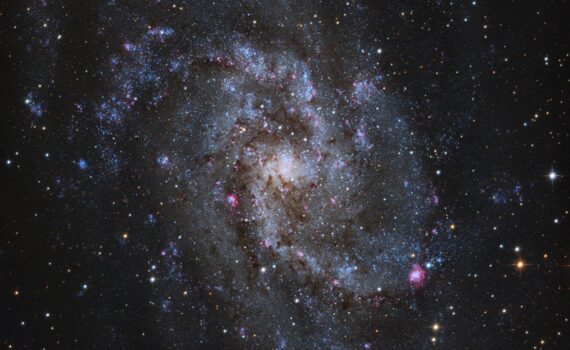
After installing our new Planewave CDK17, the first galaxy we aimed at is the Triangulum Galaxy, M33. This telescope with a focal length of almost 3 meters in combination with the QHY600M CMOS camera gives an unbinned pixel scale of 0.26 arcsec/pixel. Only during nights with exceptional seeing conditions, we […]
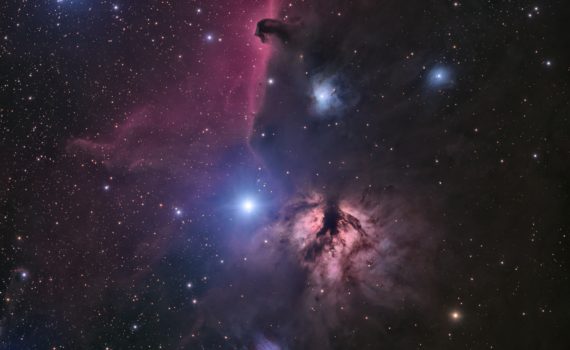
Not too far from the famous Orion Nebula and situated around the star Alnitak, the leftmost of the three stars making up the belt of Orion is an ensemble of bright and dark nebulae. It contains the well-known horsehead nebula, which is a dark dust cloud in front of an […]